Core Insights!
- Cost per click advertising is the amount you pay whenever a user clicks on your search or display ads.
- CPC is one of the most popular pricing models, as it lets you pay for user engagement rather than impressions.
- Average cost-per-click is calculated using the standard formula: total ad spend divided by total clicks.
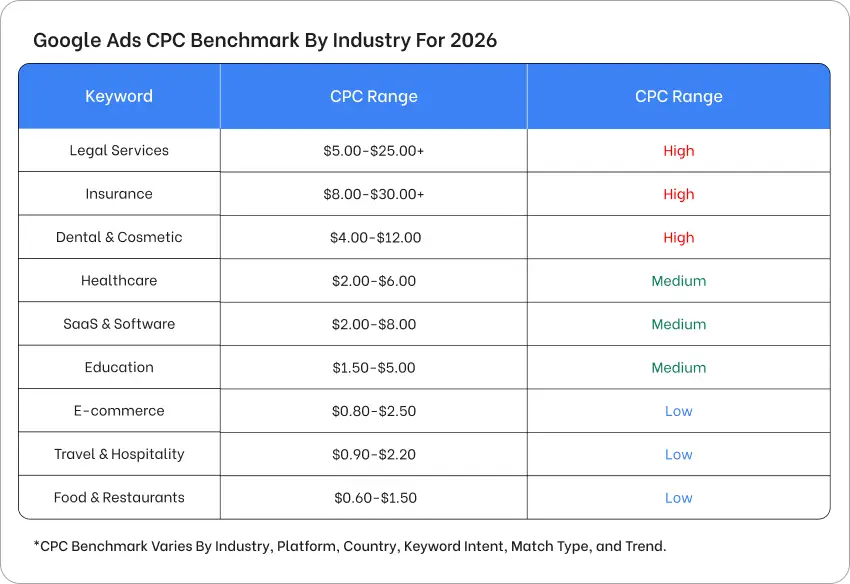
- Legal and insurance have the highest CPC on the Google advertising platform.
- The average Facebook ads cost per click is £0.78, whereas the average Google ads cost per click is £1.55.
- CPC depends on various factors, including ad type, platform, industry, match type, targeting, bidding strategy, and current trends.
- High CPCs are acceptable only if the click quality and revenue justify your ad spend. If not, you’ll have to review your CPC bidding strategy to improve traffic efficiency.
Ever looked at your ad account and wondered why you’re paying $2 for one click while your competitor seems to pay half that?
Every advertiser, whether they’re running their first PPC Ad campaign or managing budgets across multiple platforms, eventually runs into the same question: Am I paying too much per click? That’s where cost-per-click advertising comes in.
It’s one of those advertising metrics that sounds simple on the surface but actually shapes your entire ad strategy, from budget planning to bidding decisions. Get it wrong, and your ad spend disappears faster than you can imagine.
In this guide, we’ll break down what CPC is, how to calculate it, and practical ways to reduce it to maximize your campaign performance.
What is Cost-Per-Click in Advertising?
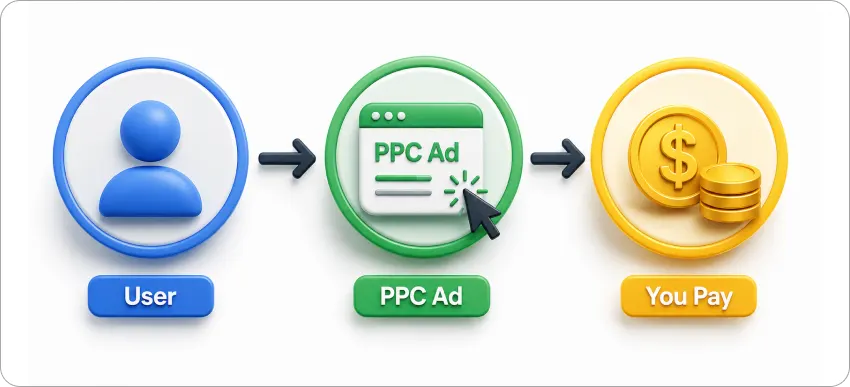
CPC, or Cost per click in advertising, is the amount an advertiser pays each time a user taps or clicks their ad. It’s a core paid advertising metric that measures how much you’re spending to drive online traffic to your website, landing page, or direct offer.
It allows advertisers to pay only for the engagement the ad receives rather than the number of times it appears on users’ screens, making CPC ideal for performance-focused pay-per-click campaigns.
In short, CPC shows exactly what you’re paying to pull one person to your desired destination through an ad.
Cost-per-click (CPC) rates vary significantly across different industries due to factors such as competition, audience demand, and market dynamics. The table below presents the Google Ads CPC benchmarks by industry for 2026.
Source: AdPredictor AI
Cost-Per-Click Advertising: Pros, Cons, and When to Use It
CPC in online advertising lets you pay for the engagement your ads generate rather than for the visibility they receive, but it can become competitive in markets like legal, insurance, and healthcare. Here are the pros and cons of cost-per-click advertising you can’t miss.
Pros of Cost-Per-Click Advertising
- You Pay Only for Actual Clicks: In CPC advertising, you only pay when someone shows real interest in your offerings by clicking on your online CPC ads, no matter how many impressions it generates. It makes CPC a cost-effective pricing model.
- You Can Generate Website Traffic Instantly: Unlike traditional marketing strategies, pay-per-click advertising campaigns start showing real results within a few hours of launch. Faster than organic SEO.
- You Can Reach High-Intent Buyers: If you run PPC campaigns, you can target high-intent search queries that your audience frequently searches for. It increases conversion opportunity, as users searching online for high-intent commercial keywords are more likely to click and convert.
Cons of Cost-Per-Click Advertising
- It Can Be Expensive: The cost per click of ads can vary from under $1 to over $50. The price of clicks depends on several factors, including competition, keywords, industry, and other market factors.
- It Can Drive Low-Quality or Invalid Clicks: Not every click on your CPC ads is intentional. A user might have mistakenly clicked on your ad, or your advertising platform might be providing fraudulent or bot traffic. In such scenarios, high CTR and website traffic don’t guarantee conversions, and your CPC increases too, affecting your overall budget.
- Results Stop When Ads Stop: Cost-per-click advertising offers no lasting value once budgets run out. Traffic and leads vanish instantly, unlike organic strategies that continue delivering results long after the initial effort invested.
Comparison Chart: CPC vs CPM vs CPA
Along with cost per click, CPM, and CPA, these are the most commonly used pricing models. Each has a distinct functionality, budget requirements, and usage. Understanding the core difference will help you select the pricing model that best aligns with your digital marketing strategy.
| Factors | CPM (Cost-Per-Mille) | CPC (Cost-Per-Click) | CPA (Cost-Per-Action) |
|---|---|---|---|
| Core Functionality | Pay for every 1000 impressions. | Pay only for clicks. | Pay only when the desired action is taken (sign-up, deposit, or purchase). |
| Keyword Importance | Less Important | Very High | High |
| Budget Requirement | Moderate | High | Very High |
| When to Use | Brand Exposure | Lead Generation | Drive Conversions |
| Funnel Stage | Top of Funnel | Middle of Funnel | Bottom of Funnel |
| How to Measure | CPM = (Total Ad Spend ÷ Total Impressions) × 1,000 | CPC = Total Ad Spend ÷ Total Clicks | CPA = Total Ad Spend ÷ Total Conversions |
If your advertising goal is to increase customer acquisition and you’re willing to pay for competitive search queries and ad placements, then you should use cost-per-click bidding. Otherwise, use CPM for brand awareness and CPA to generate conversions.
Also Read: CPC vs CPM: Which Advertising Pricing Model is Best for Your Ad Campaign?
Max CPC vs. Actual CPC vs. Average CPC: What’s the Difference?
Here’s a simple breakdown between max CPC, actual CPC, and average CPC.
Max CPC
Max CPC is the highest amount you’re willing to pay per click to reach your performance marketing goals. Your pay-per-click won’t cost you more than your specified CPC.
Actual CPC

Actual CPC is the final amount you pay to an ad network or platform for each click. It is usually equal to or less than your Max CPC bid. However, sometimes it can exceed your Max CPC due to factors such as campaign settings, bid adjustments, or a weak Quality Score.
Here, you’re actually paying to beat your competitors. 🤔 And you know what? You can beat your competitors with a lower cost per click (CPC) if you have a high quality score. You can save big while continuously reaching your intended audience.
Average Cost Per Click
Average CPC is the mean cost per click across all clicks in a campaign over a chosen time period. It helps you evaluate overall spending efficiency and compare performance across campaigns, rather than looking at individual click costs.
How is Cost Per Click Calculated?
You can use this formula to calculate cost per click for your ad campaigns.

Cost per click is the total ad spend divided by the total number of ad clicks. For instance, you spend $1,000 on your eCommerce ads and generate 500 clicks; then your CPC is $2. It’s calculated as:
Average CPC = $1000 ÷ 500 = $2.
You can also use CPC calculators to estimate how much you should be spending per click on your ads based on your targeting.
How CPC Works in Advertising?
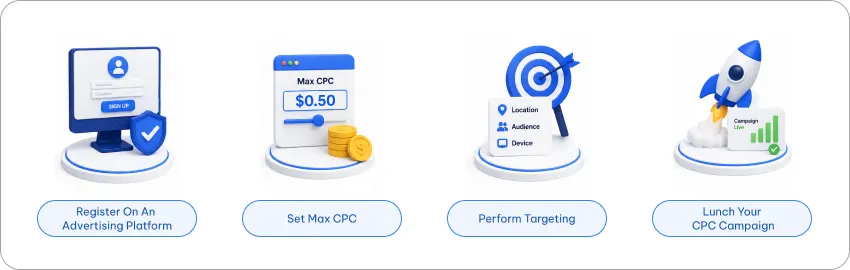
Cost-per-click advertising allows you to pay only when someone genuinely wants to explore your offerings. You register on an advertising network or an auction-based advertising platform and then set the max CPC you’re willing to pay. Whenever a user clicks on your ad, the amount charged is deducted based on the CPC bid you selected during campaign setup.
For instance, in advertising networks like 7SearchPPC, you set the CPC, and the system deducts that specific amount whenever someone clicks your ad. In contrast, in an ad auction system with real-time bidding, advertisers compete for ad placements, and the highest suitable CPC bid wins the opportunity to show their ad.
Also Read: AI Vs Manual Campaign Management: What’s Better
If you’re using a search advertising platform, creating search ads, and placing CPC bids for your industry keywords, it will look like this.
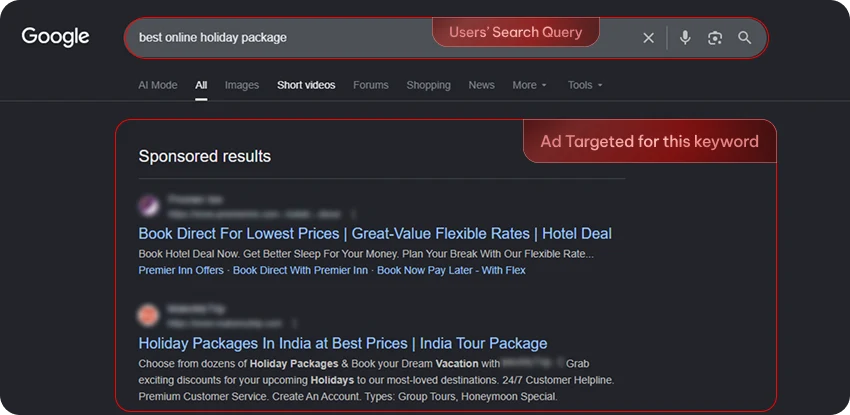
If you’re running display ads for your CPC campaigns, they will appear in this format.

Source: Forbes
What is Considered a Good Cost-Per-Click in Advertising?
There isn’t a fixed cost-per-click advertising benchmark, as it varies based on several factors.
What you can do: You can analyze CPC across platforms based on criteria such as ad type, placement, match type, and others, to choose the one that can help you get more clicks without increasing your CPC.
Based on your insights, you can eliminate those whose average YOY CPC keeps rising while revenue per click remains flat.
|
The best approach to setting a good cost-per-click for your advertising campaigns is to continuously monitor your performance and identify the average CPC that drives the most revenue per click, based on your targeting and industry.
Top Factors That Impact Cost-Per-Click Advertising and How to Lower It
Common factors that influence cost-per-click advertising, along with optimization strategies to reduce it, are listed below.
1. High Keyword Competition
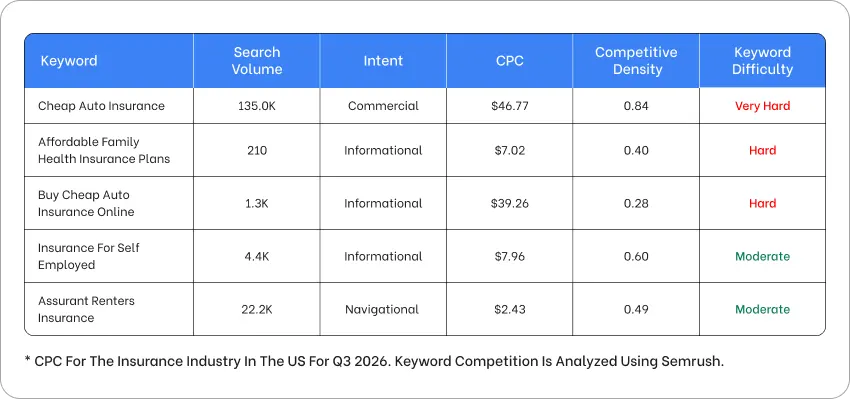
Keyword intent, volume, and competition vary by region and keep changing over time. Industries like Legal and Insurance have high CPCs, which intensifies competition and makes it difficult to secure a higher sponsorship position in SERPs.
These industries experience high CPC because their customers’ lifetime value is high.
How to Reduce Your CPC
Prioritize Long-tail keywords. Head terms and medium-tail keywords are too difficult to compete for in crowded niches.
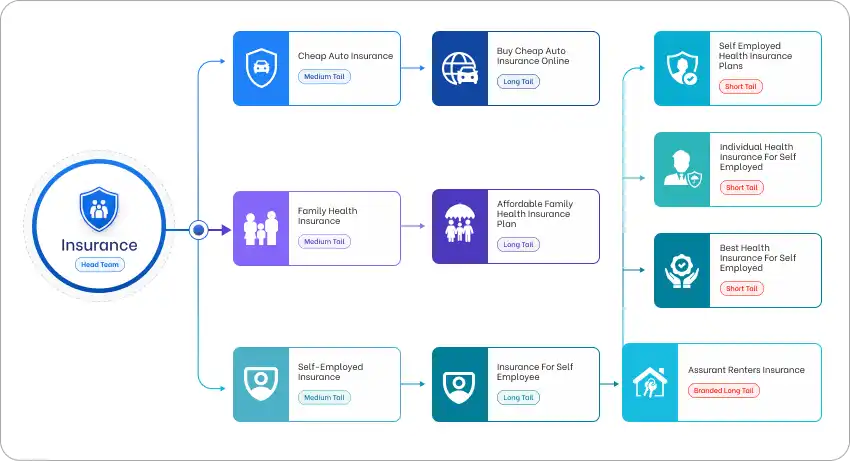
You can segregate your niche’s head terms into medium-tail keywords and then further into specific long-tail keywords.
This strategy allows you to target keywords with moderate or lower cost-per-click (CPC) that align with your advertising goals. By doing so, you enhance ad grouping and increase conversions, focusing not just on clicks but also on profit.
You can also create a list of negative keywords to prevent search intent you don’t want to target. This helps improve click quality and reduces ad waste.
2. Poor Quality Score
A quality score is a search metric that shows how well your ad performs compared to your competitors. Your ad receives a quality score from 1 to 10 based on its relevance, landing page experience, and expected click-through rate.
These parameters are thoroughly evaluated by search algorithms and labeled as: “Above Average,” “Average,” or “Below Average.”
A high-quality score indicates that your ads are relevant to searchers. Conversely, a below-average score results in lower search rankings and higher CPCs.
How to Reduce Your CPC
Improve your quality score. Create targeted paid ads for specific regions to improve relevance and increase positioning. Analyze landing page speed, content, and design alignment with ads, ensure easy navigation, and no broken links to improve quality score and reduce CPC.
3. Irrelevant Ad Placement
When your ads appear on websites or apps unrelated to your target audience’s interests, engagement drops and CPC costs rise. Irrelevant placements attract fewer qualified clicks, lower your Quality Score, and force you to pay more to acquire potential leads, wasting budget on users less likely to convert.
How to Reduce Your CPC
Integrate postback tracking to measure where and how much the system is placing bids, and whether those bids add value to your campaigns. This way, you can whitelist the traffic sources that generate profits and blacklist the ones that waste your budget.
4. Random Ad Targeting
Running PPC campaigns all day long. Showing ads to people who are merely interested in your ads not just creates audience bloating, but also affects your CPC.
How to Reduce Your CPC
Perform audience segmentation to target relevant placements, peak hours of the day, and moments that capture most of your audience’s attention. Also, analyze the seasonal trends.
If your audience tends to shop more often during a particular season, like during Black Friday and Cyber Monday, shoppers start seeking products and services before the start of Q4.
Take this into account and aggressively increase your bids during these high-engagement seasons to increase lead generation.
5. Deceitful Clicks
Fraud clicks occur when someone intentionally clicks your ads without genuine interest, either manually or via a bot. It eventually exhausts your advertising budget, increases CPC, and affects your overall PPC advertising campaign performance.
How to Reduce Your CPC
Closely monitor ad performance. Use tracking tools to evaluate bot clicks and red-flag the source IP and networks that are sending bot traffic.
Effective CPC Tip: Rather than chasing the lowest CPC. Aim to measure key performance metrics, including CTR, ROAS, scroll depth, and conversion rate, as well as impressions and clicks. It’ll help you decide whether to pause or eliminate the ads that aren’t bringing conversions. Your ultimate goal isn’t to bring in more clicks, but rather to drive more valuable leads to sustain your business in the long run.
Best CPC Ad Networks You Can’t Afford to Miss
The cost-per-click advertising networks that deserve your attention are mentioned below.
| Best CPC Advertising Networks | Best For | Perks | Ad Formats |
|---|---|---|---|
| 7SearchPPC | Media Buyers, Performance Marketers, Affiliate Marketers, and Custom Advertisers |
| Native, Banner, In-Page Push, Popunder, and Text |
| AdRoll | Retailers and Software Providers |
| Display, Native, and Video |
| AdCash | Media Buyers, Affiliates, and Brands |
| Popunder, Interstitial, In-Page Push, Display, and Video |
| Clickadu | Affiliates and Agencies |
| Banner, Popunder, In-Page Push, Instant Text Message, Video Pre-Roll, and Skim |
| PopCash | Advertisers of Small-Medium Sizes |
| Popunder, Social Bar, Interstitial, and In-Page Push |
We’ve selected these CPC advertising networks based on their cost-effectiveness, user-friendliness, targeting capabilities, and professional support.
You can choose to dig more about them or explore more just CPC ad networks through our post: Best PPC Advertising Networks. This post features 15 top advertising networks that boost the reach and conversion likelihood of your PPC ads.
Your Next Step in CPC Advertising!
Analyze your industry keywords, audience behavior, and trends to estimate an ideal CPC for your campaigns that doesn’t restrict your reach and helps you increase customer acquisition, not just clicks.
Lastly, constantly track and optimize your CPC bidding strategy to find and eliminate loopholes before they cause severe damage.
Frequently Asked Questions (FAQs)
Q1. What is cost per click advertising?
Cost-per-click advertising refers to the amount advertisers pay per click.
Q2. How is cost per click calculated?
Calculating CPC for your online advertisements is simple and straightforward. Just divide your total advertising budget by the total number of clicks to measure your cost-per-click.
Q3. What is a good cost-per-click?
A good cost-per-click is the one that helps you achieve your PPC marketing goal, instead of the one that drives irrelevant traffic and lower conversions. Consider your advertising goals, target audience, competition, and market conditions to set an effective CPC for your PPC campaigns.
Q4. What are the top cost-per-click ad networks?
7SearchPPC, ClickAdu, AdCash, and AdRoll are a few leading cost-per-click advertising networks you can leverage to run your PPC ad campaigns in 2026.
Q5. What is the difference between CPC and PPC?
CPC and PPC look similar at first glance, but they do differ slightly. PPC (Pay-Per-Click) is the paid advertising model you choose to promote your offerings, while CPC (Cost-Per-Click) is the native pricing unit that defines how much you would pay for each click.
Q6. Cost per click vs CPM: Which is better?
It depends on your advertising goals. If your aim is to build brand recognition and attract bulk traffic to your website, choose CPM, since you’ll be paid for every 1000 impressions regardless of clicks. However, if your primary goal is to increase engagement and lead generation, go with CPC, as you’ll only be charged when someone clicks on your ads.
Q7. How important is keyword research in CPC?
Choosing the right keywords in CPC advertising is imperative, as it allows you to target high-intent search queries, increase ad relevance, and reduce your CPC.
Q8. Is high CPC always bad?
No, high CPC isn’t always bad. If you’re generating quality traffic, increasing customer lifetime value, improving conversion rates, and growing revenue, then a high CPC can be acceptable.